In the past, we looked to religion to tell us what to do. In Duccio’s time, our art was all icons and altarpieces. However, we would become increasing secular and enlightened. In 1882 Nietzsche wrote: God is dead and we killed him. Once we killed external authority, we had to invent our own rules, to work out what to do for ourselves, to take responsibility, create our own morality, find our own way. That lead to doubt and disruption, existentialism, and to modern and contemporary art, art based on questions not on answers.
We’re now entering a new epoch. AI. We’re creating superintelligent machines that will think better than we can, that will guide us, make decisions for us, and answer our prayers—that will be close to authoritative. Having long since killed god, we are now effectively creating a new god—one that can create images of us and for us. Will contemporary art survive? Perhaps we won’t need artists to come up with audacious new images and ideas anymore. How could they compete with the abundant creativity of AI? If AI does it better, will it make human endeavour and insight seem superfluous?
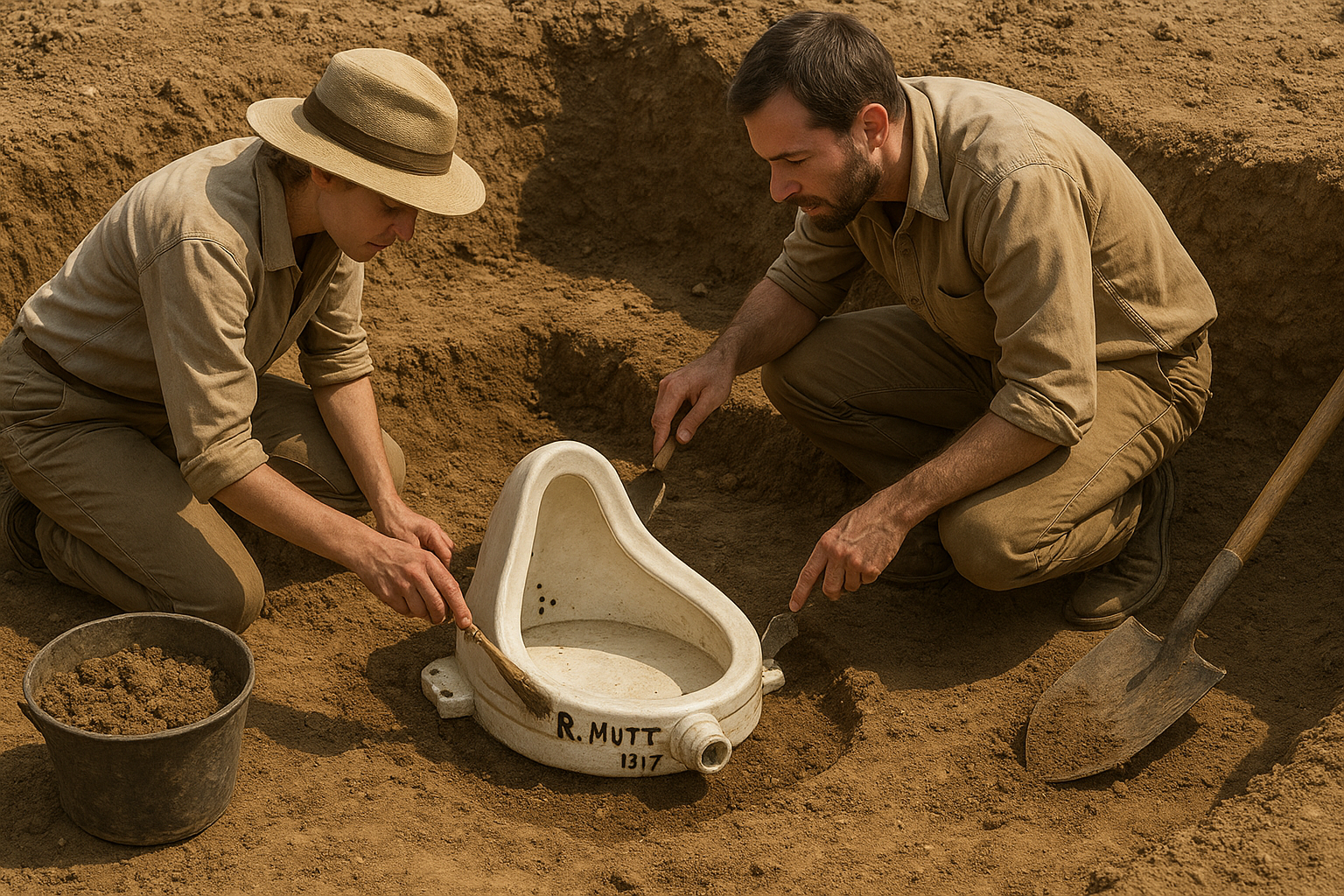
If contemporary art doesn’t survive, perhaps contemporary art museums will, not to present new art, but to present contemporary art as a thing of the past—answering to a nostalgia for a time when artists felt compelled to struggle, to create new ideas and images, new forms of thought and feeling—a time when human creativity and agency mattered. Perhaps contemporary art will become like ancient art is for us now, something we want to connect with through our humanity, despite being historically estranged from it.
I asked ChatGPT to picture archaeologists excavating Duchamp readymades. It produced the image above. Interestingly it got the date of Fountain wrong, unprompted, making Duchamp a contemporary of Duccio. Was this error or insight?
•