Robert Leonard

Contemporary Art Writer And Curator

Content Warning

July 21, 2018

.
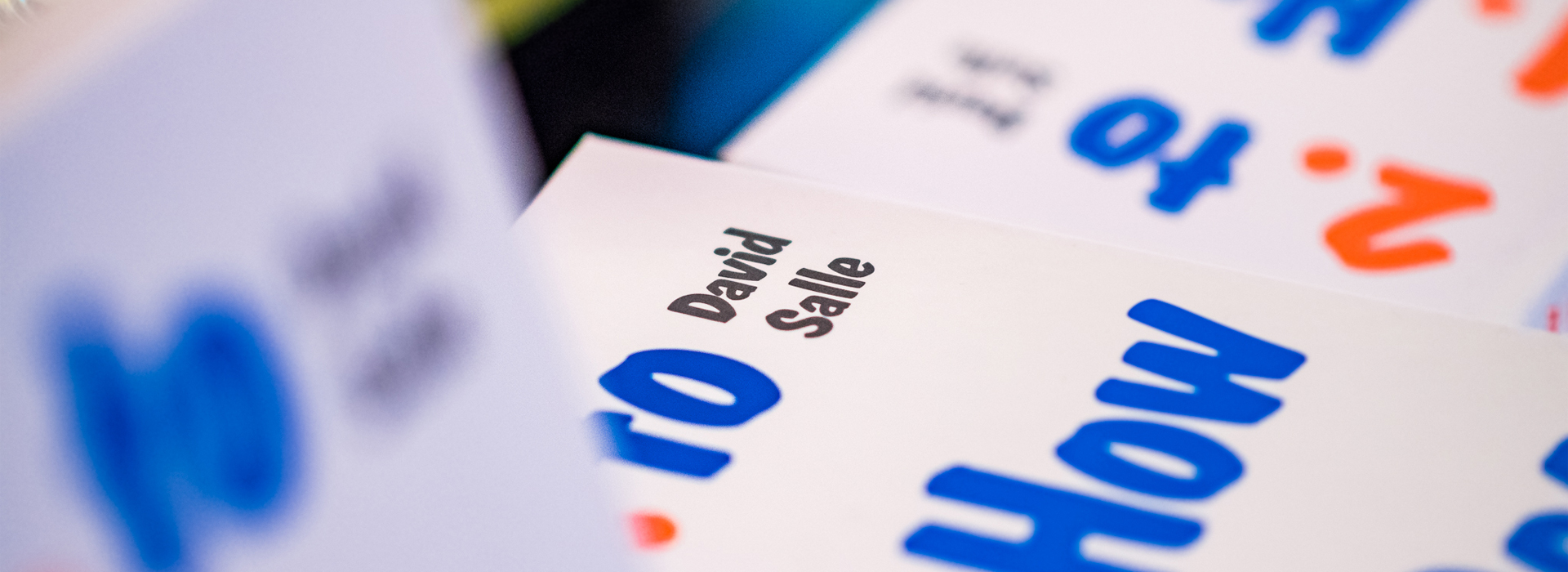
I’ve been enjoying David Salle’s essay collection, How to See, which was published back in 2016. It’s self-consciously old fashioned, down to its anachronistic design and coarse black-and-white reproductions. Its pieces juggle Salle’s artist’s insights into art works with in-the-know, behind-the-scenes asides about the artists. It’s art criticism as dinner-party repartee. Salle name drops and sound bites like there’s no tomorrow, but it’s all rather readable, balancing a dash of erudition with a lot of writerly flair. As a painter, Salle can be repellant (in a good way); as a writer, he’s easy to like—good company. What I like most is the way he gives voice to my own prejudices. Who doesn’t like that? I particularly adore his swipes at contemporary art’s current fetish—content. ‘Aboutism’ we call it. Here, he scores some killer blows.

Take this: ‘The focus on the what in art has been going on forever, or at least since 1865, the year Édouard Manet provoked the audience with Olympia—a painting of a reclining, dark haired courtesan, skin pale as chalk, adorned only with a pair of “come hither” mules and a black choker. You can imagine the dialogue in the cafes, over a glass of absinthe: “He painted what?” Subject matter—the what—can of course be a big deal. It’s also easy to talk about. But more to the heart of the work, the thing that reveals its nature and quality, is the how, the specific inflection and touch that go into its making. To take a work’s temperature, look at its surface energy. Like syntax and rhythm in poetry, it’s the mechanics that reveal an artist’s character. They determine the way art will get under our skin, or fail to.’

And this: ‘Sometimes what we call an idea is really more of an enthusiasm, the passing intellectual weather. Artists are curious, they pursue all kinds of obscure knowledge. Some like to do research, and art seems like as good a place as any to show off one’s interests. The ideas with staying power are those that intersect with an artist’s inclination for form, causing it to deepen and expand, like a paper flower that blooms when you put it in water.’
•

Monozygotic

July 8, 2018

.
Above: Wellington’s proposed film museum and conference centre. Below: The Broad, LA, designed by Diller Scofidio + Renfro.
•

Mrkusich Cornered

July 1, 2018

..
When the abstract painter Milan Mrkusich died last month, at the ripe old age of ninety-three, it felt like the end of an era. The ‘big three’ of the New Zealand national-art canon—Rita Angus, Colin McCahon, and Toss Woollaston—were long gone, passing in 1970, 1987, and 1998 respectively; and Gordon Walters, Mrkusich’s fellow traveller in modernist abstraction, departed in 1995. So Mrkusich outlived them all—by almost twenty years.

In New Zealand, Mrkusich has always been the textbook exemplar of modernist abstraction—modernist abstraction and nothing but. He started working in an abstract idiom in the mid-1940s. From the outset, his work was rooted in design principles—the Bauhaus. He did modernist interior and furniture design as a day job. Then, in 1952, he built himself an award-winning modernist home, where he would live and work for the remainder of his days in splendid isolation. (Marti Friedlander’s photos of him there—in his clean, orderly studio—implied that his art and life were of a piece.)

In the 1950s and 1960s, Mrkusich worked his way through a range of art idioms and ideas. In different works, we hear echoes of Piet Mondrian, John Tunnard, Ben Nicholson, Mark Rothko, etcetera. At this time, McCahon was also considering his options, trying stuff out. While Mrkusich and McCahon would later seem to be poles apart, their works in these years sometimes seem to be caught in a dialogue, a dance. At Auckland Art Gallery, I always loved seeing Mrkusich’s cubisty City Lights (1955) hanging alongside McCahon’s cubisty Flounder Fishing, Night, French Bay (1957) in a game of visual Snap.

In the 1960s, Mrkusich’s paintings sometimes emphasised designy graphic and geometric elements, sometimes expressive painterly ones, and sometimes combined them, as if seeking some resolution between thought and feeling, calculation and intuition. My favourite example: Painting 62–19 (Little Radiance) (1962). His Emblems (1963) and Elements (1965) fused formal inquiry with metaphysical symbolism, lifted from Rudolf Koch’s The Book of Signs.

Mrkusich’s breakthrough came in 1968, when he began his radically simple Corner paintings. They were more-or-less monochrome fields—some flat as, some inflected and ‘atmospheric’. They had contrastingly hued and toned triangular ‘corners’. Resembling photo corners or blotter corners, they seemed to hold the colour fields in place and more-and-less impeded our gazes from escaping the field. In some examples, the corners were the same hue and tone; in others, the corners optically advanced and receded to different extents, torquing the fields. The best are about sixty-eight inches square—neither big nor small, dominant nor submissive. The Corner paintings were the ultimate resolution of material literalness and immaterial beyondness, the architectural and the atmospheric, without resorting to symbolism or allegory.

With the Corner paintings, Mrkusich nailed it. It was hard to see how or where the idea could be taken further. And, in a larger scene, perhaps he could have gone on making them forever. In subsequent decades, Mrkusich continued to make important, handsome works, but nothing to top the brilliance and consequence of the Corner paintings—or build on them.

It’s often said that in New Zealand abstraction was neglected—marginalised. There’s truth to this. But Mrkusich was also hugely successful. He had his Auckland City Art Gallery retrospective at in 1972, the same year as McCahon. In the 1970s, Mrkusich first, then Walters, were the big-name abstract painters. They were cornerstones in the argument of Auckland’s legendary separatist Petar/James Gallery, which championed formal abstraction and also represented young-turk painters, including Stephen Bambury, Richard Killeen, and Ian Scott.

Nothing holds. In the late 1980s, the battle lines would shift again, with postmodernism. Abstraction would be read in a new way, a ‘post-formalist’ way—less as form, more as sign. As if in response, Mrkusich softened his formalist hard line, allowing allusions to landscape and metaphysics to return in his Journeys (1986–9), Chinese Elements (1989), and Alchemical Spectrum (1990). Later, he would duet with younger post-formalist abstract artists, like John Nixon (at Sue Crockford Gallery, Auckland, in 2007) and Julian Dashper (at Hamish McKay Gallery, Wellington, in 2008)—despite their being fully cheese to his chalk.

In the 1990s, Mrkusich would find himself eclipsed by Walters, whose standing was paradoxically enhanced by the cultural-appropriation debate, even though he claimed his works were purely formal—as champions ran to Walters’s defence. He remains a live issue in the culture—there’s a Walters industry. Dunedin Public Art Gallery and Auckland Art Gallery have just done a major Walters show, and it’s touring to Te Papa. By contrast, Mrkusich’s last public outing was rather glorious, but four years ago and in Masterton!

Mrkusich was a resourceful, intelligent painter. His works were brainy and good looking. But, while he’s a key figure in our national art history, he aspired to an entirely different context—a different conversation, which never came. The dilemma remains: what to do with an internationalist whose work is only known on these islands; what to do with him in this postmodernist, post-formalist, post-medium, post-national moment; what to make of him, now?
•

« Previous Page
Next Page »


Who Am I?

I am a contemporary art curator and writer, and Director of the Institute of Modern Art, Brisbane. I have held curatorial posts at Wellington’s National Art Gallery, New Plymouth’s Govett-Brewster Art Gallery, Dunedin Public Art Gallery, Auckland Art Gallery, and, most recently, City Gallery Wellington, and directed Auckland’s Artspace. My shows include Headlands: Thinking through New Zealand Art for Sydney’s Museum of Contemporary Art (1992); Action Replay: Post-Object Art for Artspace, Govett-Brewster Art Gallery, and Auckland Art Gallery (1998); and Mixed-Up Childhood for Auckland Art Gallery (2005). My City Gallery shows include Yvonne Todd: Creamy Psychology (2014), Julian Dashper & Friends (2015), Francis Upritchard: Jealous Saboteurs (2016), Colin McCahon: On Going Out with the Tide (2017), John Stezaker: Lost World (2017), This Is New Zealand (2018), Iconography of Revolt (2018), Semiconductor: The Technological Sublime (2019), Oracles (2020), Zac Langdon-Pole: Containing Multitudes (2020), and Judy Millar: Action Movie (2021). I curated New Zealand representation for Brisbane’s Asia-Pacific Triennial in 1999, the Sao Paulo Biennale in 2002, and the Venice Biennale in 2003 and 2015.

Contact

BouncyCastleLeonard@gmail.com
+61 452252414

This Website

I made this website to offer easy access to my writings. Texts have been edited and tweaked. Where I’ve found mistakes, I’ve corrected them.

.

Selected Writings

2026

  • Scott Redford: High Concept 
  • Jarrod van der Ryken: Mirror Rot
  • Florian Habicht Filmmaker

2025

  • Jarrod van der Ryken
  • Susan King

2024

  • Rebecca Baumann: Apolitical Utopias
  • Miguel Aquilizan: Mutagenesis
  • Sarah Poulgrain: Take Me to the River
  • Ralph Hotere: Taranaki Gate Stations

2023

  • Brent Harris: Hidden Figures
  • Michael Zavros: The Devil’s in the Detail
  • The Last Word
  • Kathy Barry: Within You Without You
  • Anselm Kiefer Has Left the Building
  • Tia Ranginui: My Other’s Other

2022

  • Giovanni Intra: The Light that Burns Twice as Brightly
  • Brett Graham: Art of Forbearance
  • Divergent
  • Brent Wong: Twilight Zone
  • Brett Graham: Ark of Forbearance
  • Bill Hammond: Goods and Services
  • Julian Dashper: Are You Talking to Me?
  • Yvonne Todd and Geoffrey Heath: Mould in the Lens
  • John and Jane
  • Simon Ingram with Terrestrial Assemblages: Machine in the Garden
  • Venice for Beginners
  • Zac Langdon-Pole: Hurry Slowly
  • John Currin: Part of the Problem
  • John Lethbridge: Escape the Flames

2021

  • Robin White: The Tide Turns
  • Telly Tuita: Telly Vision
  • Brett Graham: Written on the Wind
  • Florian Habicht: Everything Is Kapai
  • Andrew Beck: Photography Backwards
  • Judy Millar: Paint, Canvas, Action
  • Julian Dashper: Autumn 1989
  • Yona Lee: Fix and Fit
  • Tia Ranginui: Gonville Gothic
  • In Memory of Bill Hammond 1947–2021
  • Wellness versus Art
  • Susan King: Address Unknown
  • Michael Zavros: Zeus/Zavros

2020

  • Zac Langdon-Pole: Containing Multitudes
  • Isabella Loudon: Concrete Mixer
  • Zac Langdon-Pole: Rabbit Hole
  • Kirsty Lillico: Let Me Tell You About My Mother
  • Steve Carr: Taking the Fun out of Fireworks
  • Explaining Peter Peryer to a Dead Hare
  • Stuart Ringholt: Committing Time
  • John Stezaker: A Ship’s Steering Wheel and a Hangman’s Noose
  • Gavin Hipkins: No Place (Like Home)

2019

  • Brent Harris: Sincere Disconnect
  • Colin McCahon: Numerals
  • City Chief
  • Stanley Kubrick: 2001
  • Patrick Pound: Slender Threads

2018

  • Questioning Revolt
  • The People vs. Kelley Walker
  • Eva Rothschild: The Difference a K Makes
  • Patrick Pound: The Collector’s Shadow
  • Jono Rotman: Our Enduring Image of Strength
  • This Is New Zealand
  • Ian Scott: Enzed Dead Zone

2017

  • Gavin Hipkins: The Revenant
  • John Stezaker: Twice Removed
  • Michael Parekowhai: The Empire of Light
  • Colin McCahon: On Going Out with the Tide

2016

  • Gavin Hipkins: Wives Are Scarce
  • Mikala Dwyer: Psychoplastic
  • Corita Kent: Sister Act
  • Laith McGregor: Ramblin’ Man
  • Francis Upritchard: Adrift in Otherness
  • Fifteen Minutes, Twenty Years Later: Ann Shelton’s Redeye
  • Cindy Sherman: Everything and Its Opposite
  • Julian Dashper: Nothing Personal
  • When Artists Die
  • Bullet Time
  • Michael Zavros: Daddy’s Girl
  • Jacky Redgate: What Ever Happened to Baby Jacky?

2015

  • Julian Dashper & Friends
  • Love Not Given Lightly 
  • City Mission
  • Feel the Love in Venice
  • Simon Denny: Too Much Information
  • Steve Carr: Annabel

2014

  • Yvonne Todd: Cult Appeal
  • Viviane Sassen: Detail in the Shadows
  • Mikala Dwyer: Drawing Down the Moon
  • Promiscuous Collaborator
  • Stuart Ringholt: The Artist Will Be Naked
  • Curnow’s Leverage
  • Simon Starling: Please Explain
  • Ocula Conversation
  • Michael Zavros: What Now?

2013

  • Shane Cotton: The Treachery of Images
  • Geek Moment
  • On Curating
  • Craig Walsh: Elephant in the Room

2012

  • Re-Reading Julian Dashper’s The Big Bang Theory
  • Nostalgia for Intimacy
  • Don Driver 1930–2011

2011

  • Peter Madden: Orgasm and Trauma
  • Damiano Bertoli
  • Judy Millar
  • Unnerved: The New Zealand Project
  • Michael Zavros: Charm Offensive

2010

  • Peter Robinson: Gravitas Lite
  • APT6: Nice Show
  • Scott Redford: It’s Complicated
  • Feminism Never Happened
  • Michael Stevenson: Gift Horse
  • Scott Redford vs. Michael Zavros
  • Taryn Simon’s Known Unknowns

2009

  • Vernon Ah Kee: Your Call
  • Biennale Makers
  • Hamish Keith: The Big Picture
  • Julian Dashper 1960–2009
  • Tomorrow Will Be the Same but Not as This Is
  • Jemima Wyman: The Declaration of Resemblance and Fluid Insurgents

2008

  • Hello Darkness: New Zealand Gothic
  • Vivian Lynn’s Playground Series
  • Archives Become Him: The Giovanni Intra Archive
  • The Dating Show
  • Diena Georgetti: Parallel Existence

2007

  • Katharina Grosse: Mist and Mud
  • Julian Dashper: Mural for a Contemporary House 4
  • Scott Redford: Pop Haiku
  • Grey Water
  • Yvonne Todd: Why Beige?

2006

  • Jim Speers: Outdoor Cinema
  • Curator/Surfer
  • Gordon Walters: Form Becomes Sign
  • Et Al.’s Neo-Brutalist Playground
  • Hany Armanious: Catalogue of Errors

2005

  • Mixed-Up Childhood
  • Yvonne Todd
  • Michael Smither: Print Friendly
  • AES+F: We Are the World, We Are the Children
  • Stella Brennan: History Curator
  • Michael Parekowhai: Kapa Haka Pakaka
  • At the End of New Zealand Art
  • Judy Millar: I … Would Like to Express
  • Ian Scott: Jump Over Girl

2004

  • Mike Parr: Portrait of M and F
  • Shane Cotton: Cultural Surrealist
  • Peter Robinson: The End of the Twentieth Century
  • Et Al., Jacqueline Fraser, Ronnie van Hout, and Daniel Von Sturmer: 2004 Walters Prize
  • Et Al.: Simultaneous Invalidations, Second Attempt
  • Judy Millar: Things Get Worse

2003

  • Terry Urbahn
  • Michael Stevenson: Call Me Immendorff
  • Bill Hammond
  • Michael Parekowhai
  • John Reynolds
  • Michael Stevenson
  • Michael Stevenson: This Is the Trekka
  • Peter Peryer

2002

  • Jim Speers: Everything Is in Two Minds
  • John Reynolds: A City Street. A Sign. Dusk.
  • Gavin Hipkins: The Colony

2001

  • John M. Armleder: Lovers Lane on Full Moon

2000

  • Ava Seymour: I’m So Green
  • Jim Allen: Contact
  • Stephen Bambury: Interview
  • Gavin Hipkins: The Crib
  • Michael Parekowhai: Patriotism
  • Michael Stevenson and Steven Brower: Genealogy

1999

  • Adrian Hall: Bricks in Aspic
  • Gavin Hipkins: The Guide
  • Stephen Bambury: Chakra
  • Patrick Pound: Landscape of Mirrors
  • William Kentridge
  • The End of Improvement: In Defence of Ava Seymour
  • Colin McCahon

1998

  • Te Papa: Papa’s Bag
  • Rudi Fuchs: Some Sun, Some Mist, Some Shadow
  • Gavin Hipkins, Ani O’Neill, Peter Robinson, and Jim Speers: Biennale of Sydney
  • Shane Cotton
  • Action Replay: Curators’ Introduction

1997

  • Ronnie Van Hout: Overimpressed
  • Pacific Sisters: Doing It for Themselves
  • Peter Robinson’s Strategic Plan
  • Dick Frizzell: Self Portrait as a Serious Artiste
  • Richard Killeen: Secret Handshake
  • John Nixon

1996

  • Edgar Roy Brewster: Where the Bee Sucks There Suck I
  • Peter Peryer: Second Nature
  • For Armchair Tourists

1995

  • 3.125% Pure: Peter Robinson Plays the Numbers Game

1994

  • Peter Tyndall
  • Dashper as Photographer
  • Julian Dashper and Michael Parekowhai: Perverse Homages
  • Michael Stevenson: Smokers Please
  • Michael Parekowhai: Kiss the Baby Goodbye

1993

  • Dick Frizzell: Beyond the Pale
  • Michael Smither: To My Father the Printer

1992

  • Sleeve Notes: Julian Dashper’s Greatest Hits
  • Derrick Cherrie: Two Interviews
  • James Ross: Damned Fine Paintings
  • How Far Can Curators Go?
  • Mod Cons
  • Cliff Whiting: Te Po, Te Whaiao, Te Ao Marama (From out of the Darkness, the World of Being, to the World of Light)
  • Making a Scene

1991

  • Merylyn Tweedie: Mixed Emotions
  • Michael Parekowhai: Against Purity
  • Marie Shannon: Something from Nothingness Comes

1990

  • Julian Dashper: Surf
  • Derrick Cherrie: First Impressions

1989

  • Nobodies: Adventures of the Generic Figure

1988

  • You Must Be Barbara Kruger!

Copyright © 2026 · Genesis Framework · WordPress · Log in