Unpublished.
–
Florian Habicht is one of Aotearoa/New Zealand’s most distinctive, most original filmmakers—a DIY indie auteur. He planned to make dramas but made his name with quirky documentaries.
It started with drama. Fresh out of art school, Habicht’s first feature, Woodenhead (2003), was a Grimms-style fairytale in which a dump hand escorts a mute princess through a back-blocks New Zealand reminiscent of Vincent Ward’s Vigil, encountering carnivalesque characters on the way. It was made with a cast and crew of friends in arthouse black-and-white and Habicht made a virtue of the disjunctive out-of-sync sound by recording his soundtrack first, then shooting the visuals to match and often mismatch. Chris Knox gushed: ‘This country has never looked so sensual, its people so damp with lust.’
But Habicht would quickly pivot from explicit experimentalism. His fly-on-the-wall documentary Kaikohe Demolition (2004) followed Northland locals preparing for a demolition derby. Habicht interviewed them in hot pools and in their cars, revealing a deft ability to connect with ordinary folk. His portrayal of small-town masculinity proved disarmingly sweet.
Habicht’s next two films would scramble documentary and drama. Rubbings from a Live Man (2008) was a portrait of flamboyant veteran thespian Warwick Broadhead, who told his own story utilising an arsenal of alter egos and green-screen effects, his confessions interspersed with campy, fantasy set pieces. Shot in New York, Love Story (2009) was framed as a drama—a story. Habicht pursued a Russian woman he apparently spotted on the subway carrying a slice of cake. The film was improvised, with Habicht asking people in the street for their observations on love and their advice on what to shoot next, apparently devolving authorship to them. Audiences never knew what was for real. Nor, it seems, did the filmmaker. It was Habicht’s take on the manic-pixie-dream-girl trope.
Habicht’s ability to connect with real-life characters would be crucial to his next docos. Pulp: A Film about Life, Death, and Supermarkets (2014), a concert film with a twist, celebrated the band’s return to their Sheffield hometown for the last UK concert on their reunion tour. Besides charismatic frontman/collaborator Jarvis Cocker, the real star was the homespun wit and wisdom of the ordinary people of Sheffield, including the geriatric choir who covered Pulp’s ‘Help the Aged’ in a bleak tearoom.
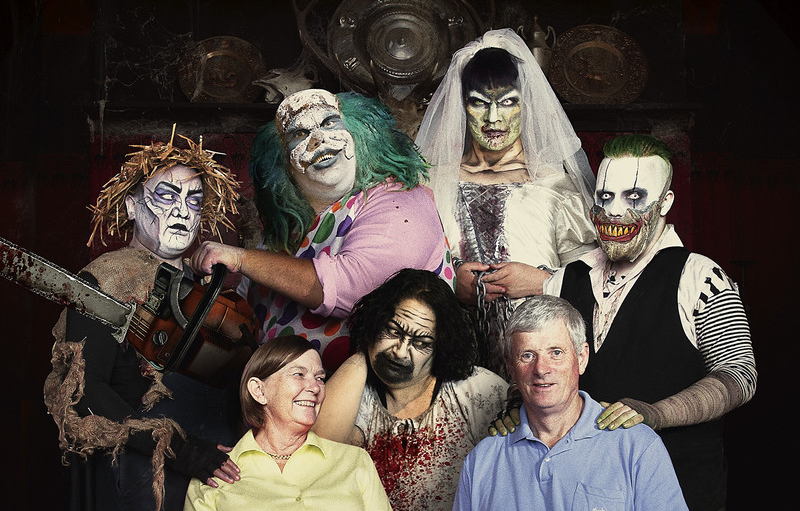
Habicht returned to New Zealand to work on Under a Full Moon, a father-and-daughter road movie, but accepted a wildcard commission to make Spookers (2017), a documentary about horror theme park in a former asylum. Going behind the scenes, however, Habicht discovered that its misfit crew were sensitive souls for whom the park provided an unlikely sanctuary.
Pulp was a box-office success, but the brilliant, genre-bending Spookers bombed, bypassing both zombie fans (who don’t care about care) and snowflakes (who don’t care for zombies). Their loss!
As a documentarian, Habicht loves his subjects, takes their sides, and lends himself to their truths. This is most evident in James and Isey (2021). James Cross recruited Habicht to make a film about his mum, Isey, for her hundredth birthday. An odd couple, they lived in a bubble on their Kawakawa farm. James considered himself a tohunga, breaking into ancient karakia, while Isey knocked back shots—a secret to her longevity. An enabler, Habicht didn’t interrogate them, but largely presented them as they wanted to be seen. The result was a feel-good classic, a surprise domestic hit.
Since James and Isey, Habicht has been working on new documentary and drama projects. He’s polishing up his script for Under a Full Moon. It’s shooting 2027, funding permitting.
[IMAGE: Florian Habicht Spookers 2017]